
The name on a plane ticket must exactly match the identification document used for travel. This rule, seemingly simple, causes boarding denials and avoidable modification fees each year. Understanding which name to enter, which document to base it on, and how to handle special cases can help avoid these situations.
Which identification document determines the name on your plane ticket
The most common confusion is believing that the ticket name must always match that of the passport. In reality, the name must correspond to the travel document used, not necessarily the passport.
For an intra-Schengen flight, an identity card is sufficient. If it has a different name than your passport (married name, spelling without accents), it is the name on the identity card that should appear on the reservation. When entering the details on the Voyage 2 Rêve website, this distinction between documents is clearly emphasized.
For an international flight outside Schengen, a passport becomes mandatory. The name to be entered is the one that appears at the bottom left of the passport, in the machine-readable zone (MRZ). This zone contains no accents or special characters, which is why airline reservation systems often only accept unaccented letters.

Birth name, married name, and compound first names during booking
Married individuals face a recurring choice: should they indicate their birth name or married name? The answer depends on what is stated on the document presented at boarding.
- If the passport only mentions the birth name, enter the birth name when booking the flight.
- If the passport includes both (birth name and married name), you can use either one, or both, depending on the fields offered by the airline.
- If your identity card carries your married name and you are traveling with this document, use the married name on the ticket.
For compound first names (Jean-Pierre, Marie-Claire), the rule varies by airline. Some require the hyphen to be removed, while others accept it. The safest reflex remains to reproduce the first name as it appears in the MRZ of the passport, without hyphen or unnecessary spaces.
Second first name: should it be entered
Most carriers do not require the second first name. The API/PNR checks sent to border authorities tolerate the absence of a second first name as long as the first name, last name, date of birth, and document number match. Adding the second first name is not an issue, but omitting it generally does not block boarding.
Input error on a plane ticket: what airlines accept to correct
An error of less than three letters is generally correctable with most airlines. Swapping two letters (“Dupnot” instead of “Dupont”) or omitting a letter falls into this category of minor corrections, often handled without fees or for a small amount.
On the other hand, a complete passenger change (replacing one person with another) falls under a completely different logic. A plane ticket is nominative and non-transferable. Since the tightening of controls against the illegal resale of tickets, the vast majority of airlines strictly prohibit name transfers. A few flexible or corporate fares still allow it, but this is the exception.
Accents and special characters
The reservation systems (GDS) used by airlines and travel agencies historically operate without accents. Entering “Helene” instead of “Hélène” or “Francois” instead of “François” does not pose a problem for boarding. Border checks compare the PNR data with the MRZ area of the passport, which itself contains no accents.
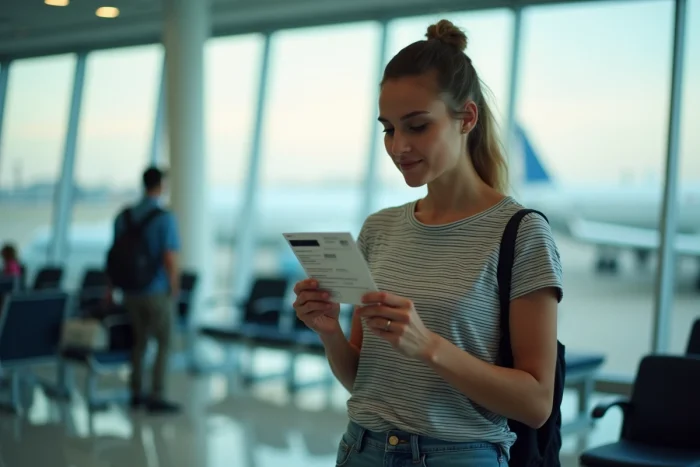
Verification before confirmation: points to check on your flight
The riskiest moment is between entering the name and confirming the reservation. A careful re-reading at this stage avoids almost all problems.
- Compare letter by letter the name displayed on the summary with your identification document open in front of you.
- Check that the entered first name is indeed the first name on the document, not a nickname or diminutive.
- Ensure consistency between the name, date of birth, and gender, as border authorities cross-check these three data via API/PNR files.
- If you are booking for multiple passengers, verify that each ticket corresponds to the correct traveler (name swaps between passengers in the same group are common).
Special case of flights to the United States
American airlines and flights to the United States impose stricter requirements. The name on the ticket must exactly match that of the passport used for the ESTA or visa. U.S. authorities verify this match even before boarding, at the time of passenger data transmission by the airline.
For travelers with a compound first name, the recommendation is to enter both parts of the first name in the “first name” field without hyphen or space, exactly as in the MRZ area.
The name on a plane ticket is not a secondary administrative formality. It is the first data checked at every stage of the journey, from security checks to immigration. Keeping your identification document open during the booking remains the most effective gesture to avoid any complications.