Rotofil, string trimmer, brush cutter: the terms overlap in the aisles and on product sheets, blurring the line between two families of tools that do not serve the same purpose. Understanding the difference between a rotofil and a brush cutter determines both the results obtained in the field and the budget involved. Here is a factual overview to guide your choice.
Battery ecosystem and cross-platform compatibility: the criterion that guides overlook
Most comparisons still pit gas against electric corded. The 2024 catalogs from Husqvarna, Stihl, and Bosch show a different reality: the 36-40 V cross-platform ranges now dominate the market. The same battery pack powers a lightweight string trimmer and a more powerful brush cutter, as well as a hedge trimmer or a chainsaw.
This shift changes the purchasing logic. If you already own a Stihl AP battery or a Husqvarna BLi charger, the choice of your next tool is made based on platform compatibility, not just motor power. Buying a rotofil from one brand and a brush cutter from another means multiplying chargers and costs.
Field feedback diverges on this point: some users prioritize the raw performance of a gas model for heavy clearing, while others prefer the consistency of a single battery ecosystem for all their gardening tools.

Roto fil or brush cutter: motorization, weight, and cutting capacity
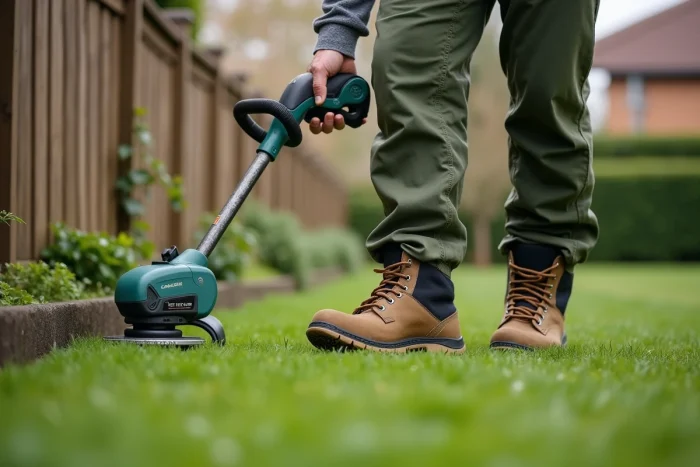
The rotofil (also called a string trimmer) uses a thin nylon line for finishing work: lawn edges, fence posts, around trees. Its motor, whether electric or battery-powered, remains modest in power. The tool is lightweight, can be operated with one hand, and is suitable for already maintained areas. To delve deeper into this topic, check out this guide on the difference between rotofil and brush cutter.
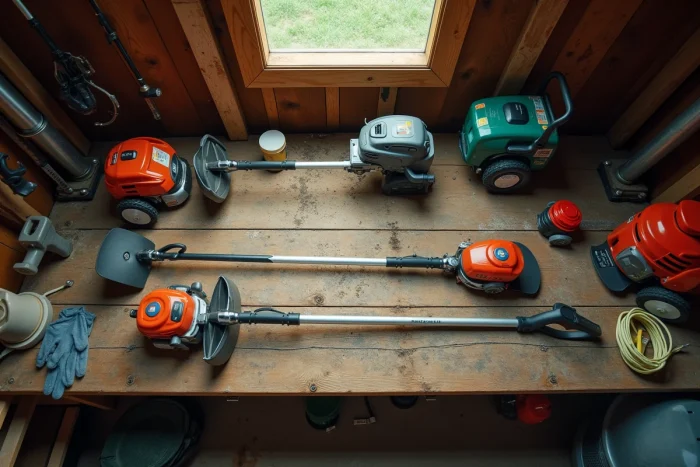
The brush cutter has a significantly more powerful motor, either gas or high-voltage battery. It accepts various accessories: thick nylon line, metal blade, grass disc. Its domain is dense vegetation, brambles, wasteland, and sloped areas that are difficult for a mower to access.
What separates them concretely
- The rotofil cuts short grass and light regrowth, where the mower cannot go. It will not handle woody stems or brush.
- The brush cutter tackles thick vegetation, young shrubs, and can mow large overgrown areas. It is heavier, noisier, and requires a harness for prolonged use.
- A string trimmer does not replace a brush cutter, and vice versa: using a brush cutter along a concrete path damages the line and wastes energy, while a rotofil facing brambles wears out without results.
Noise constraints in urban areas: a regulatory parameter to consider
Several municipalities impose strict time slots for noisy gardening equipment. Lyon and Villeurbanne, for example, recommend in their urban gardening charters the priority use of electric or battery-powered string trimmers for finishing work, due to their significantly lower noise level compared to gas brush cutters.
For a garden in a dense residential area, this criterion weighs in the decision. A gas brush cutter used on Saturday morning can generate neighborhood conflicts and, according to municipal decrees, expose you to fines. In contrast, a battery-powered rotofil produces noise comparable to that of a sustained conversation.
The available data do not allow for a universal decibel threshold, as each model has its own characteristics. Reading the local prefectural decree remains the most reliable reflex before purchasing.
Legal obligation for brush clearing: when the rotofil is no longer sufficient
In areas subject to the legal obligation for brush clearing (municipalities classified as at risk of forest fires), a simple rotofil does not meet regulatory requirements. The practical guide to mandatory brush clearing published by the Var prefecture details the expected work: removal of brush, pruning of low branches, elimination of dead vegetation on the affected plots.
These tasks require a machine capable of cutting thick stems and handling sometimes extensive areas. The brush cutter, equipped with a suitable blade or disc, is then the required tool. Non-compliance with this obligation can lead to a formal notice followed by mandatory work at the owner’s expense.
Choosing between rotofil and brush cutter based on surface area and vegetation
The choice boils down to two questions: what type of vegetation needs to be cut, and over what area?
- A regularly mowed city garden, with edges to maintain and a few flower beds to navigate around, calls for a battery-powered rotofil. The investment remains moderate and the tool is easy to store.
- A peripheral area, with zones left fallow for part of the year or slopes overrun with brambles, requires a gas or high-voltage battery brush cutter.
- For owners who have both situations (maintained lawn and wooded area to clear), purchasing both tools within the same battery ecosystem represents the most coherent compromise.
The motor power, the weight of the machine, and the type of cutting accessory directly stem from this evaluation. An overpowered rotofil or an oversized brush cutter for actual use only increases the bill and complicates handling.
The market is evolving quickly, and the boundaries between categories are blurring with versatile models featuring interchangeable heads. Checking battery compatibility, rereading the local noise decree, and honestly assessing the condition of your terrain remain the three most reliable filters before heading to the checkout.