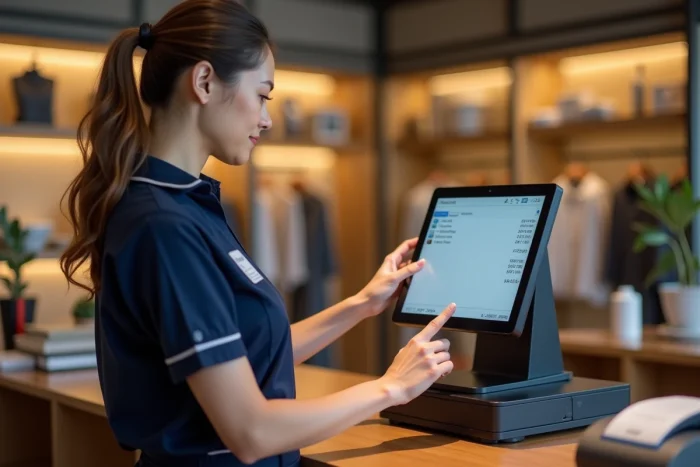
The choice of a cash register hinges on technical details that most commercial guides overlook. GDPR compliance of the software, offline functionality, synchronization with online sales channels: these criteria weigh as heavily as price or ergonomics in the success of an in-store deployment.
Degraded mode and network resilience: the underestimated technical criterion of cash registers
A cloud cash register that fails during a peak hour costs far more than the price difference between two software subscriptions. Since 2023, incidents of cloud infrastructure failures and network operator outages have increased, prompting several POS vendors to rethink their advanced offline mode.
We recommend systematically testing the system’s behavior by cutting the internet connection before signing. The degraded mode varies significantly from one vendor to another: some only allow cash transactions, while others retain the entire product catalog, ongoing promotions, and return management.
Points to check during a demonstration:
- Does the terminal keep the complete item database locally, or only the best-selling references?
- Do offline transactions synchronize automatically upon reconnection, without duplicates or loss of receipts?
- Is card payment still possible via the TPE in standalone mode, with subsequent reconciliation in the cash register software?
A serious comparison of the best cash registers for stores should systematically include this network resilience criterion, just like payment processing features or inventory management.
GDPR compliance of cash register software: what the CNIL monitors
Tax compliance (NF 525 standard or publisher certification) is a well-covered topic. GDPR compliance, on the other hand, remains a blind spot for many retailers.
Since 2023, the CNIL has increased checks on how cash register software collects and cross-references customer data. Named receipts, loyalty programs, payment histories: some uses constitute profiling subject to explicit consent. Simply associating a payment method with a purchase history without clear customer information exposes the retailer.
In practical terms, we observe three points of vigilance in the configuration of a cash register:
- The duration of retention of transactional data must be configurable and compliant with CNIL recommendations (no unlimited retention by default).
- The customer’s right to object to the cross-referencing of their data must be activatable directly from the cash register interface, without requiring technical intervention.
- Exports of customer data to third-party tools (emailing, CRM) must go through a traceable consent mechanism.
A cash register software that does not offer these native configurations generates a real legal risk. When choosing your payment solution, ask the vendor for their GDPR documentation and ensure that the retention duration settings are accessible without additional costs.
Marketplace synchronization and drive-to-store: a selection criterion for retail
The new generations of cash registers natively integrate stock synchronization with marketplaces and Google Business Profile. This is no longer a premium feature reserved for chains: for an independent business, displaying “product in stock near you” in local search results directly changes in-store traffic.
The level of integration varies greatly among vendors. Some solutions only synchronize stock quantities, while others also push prices, promotions, and enriched product listings. The frequency of updates is as important as the scope: a synchronization every 24 hours is not sufficient for a high-turnover business.
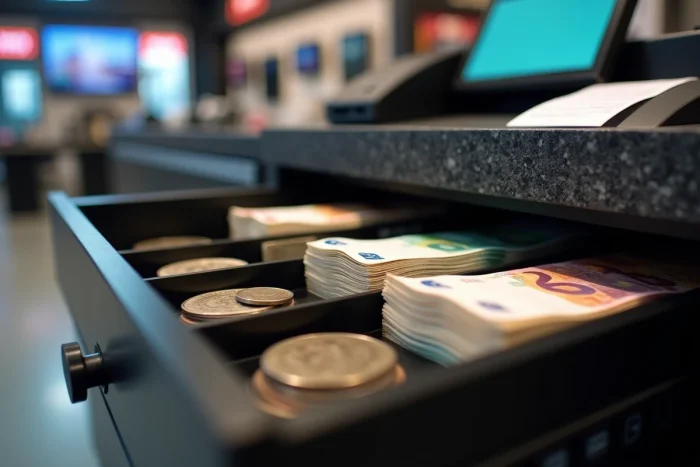
Before choosing a touchscreen or cloud cash register, list your current sales channels and those you plan to implement in the next 18 months. A cash register software without a native marketplace connector will require you to use third-party tools, with associated costs and maintenance complexity.
Hardware architecture: tablet, fixed terminal, or dedicated touchscreen cash register
The debate between tablet cash registers and dedicated terminals is not just a budget question. The hardware architecture determines the durability, security, and capacity for system evolution.
A solution on iPad or Android tablet offers quick handling and a low entry cost. It is suitable for businesses with moderate transaction volumes and few peripherals (no scales, no label printers). However, the tablet remains a consumer-grade device whose lifespan in intensive use rarely exceeds three years.
A dedicated cash register terminal, with an integrated touchscreen, cash drawer, and ports for peripherals, better withstands the demands of a high-traffic point of sale. The initial extra cost is offset by greater longevity and better compatibility with business accessories (barcode scanner, receipt printer, customer display).
The choice also depends on your activity: a local business with a short queue does not have the same requirements as a clothing store managing sizes, colors, and frequent returns. In the latter case, the functional richness of the software and the robustness of the hardware take precedence over ease of installation.
The management of a high-performing store relies on a payment system aligned with your real constraints, not with a pricing grid. Test the offline mode, audit GDPR compliance, check marketplace connectors, and size the hardware according to your daily customer flow. These four filters eliminate the majority of unsuitable solutions even before comparing prices.