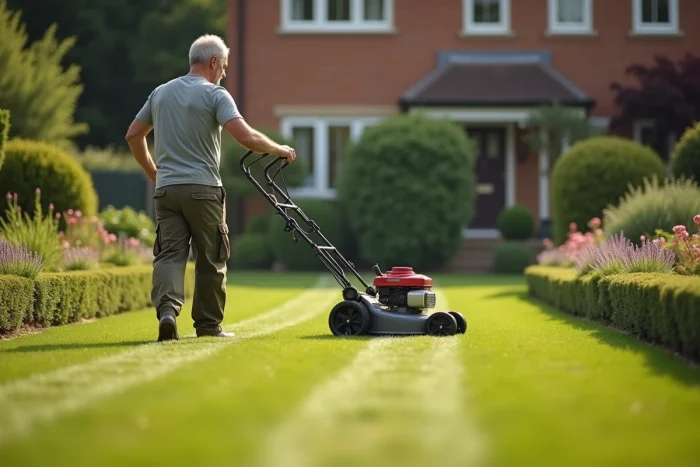
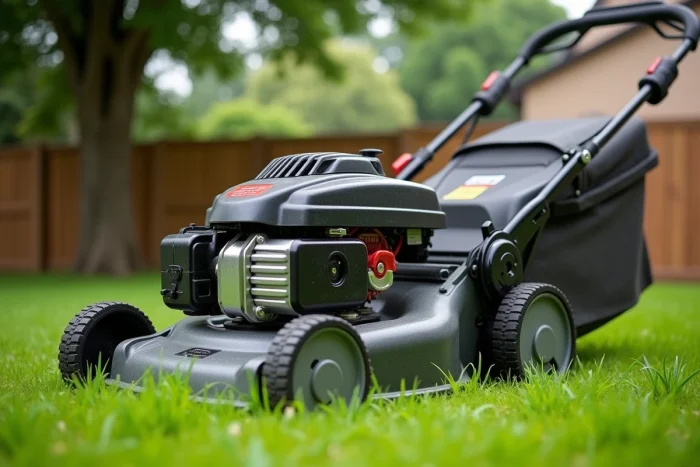
A thermal mower operates thanks to a gasoline engine (four-stroke, sometimes two-stroke on older models) that drives a rotating blade under a metal casing. This type of machine is intended for areas exceeding a few hundred square meters, where the autonomy of a battery or the reach of a cable become constraints.
Choosing the right thermal mower involves balancing engine displacement, cutting width, discharge system, and the ability to maintain the machine over time.
Repairability of thermal mowers: a criterion that product sheets ignore
Online comparisons detail power, collection bag, and price. They overlook a point that conditions the actual lifespan of the machine: repairability varies greatly from model to model.
The Repar’acteurs Network in Nouvelle-Aquitaine notes that recent low-cost thermal mowers are significantly less repairable than models from about ten years ago. Non-removable engines, thinner casings, and glued plastic parts instead of screwed ones complicate the repair technician’s intervention.
For some generalist brands, stock shortages of parts frequently exceed three months, according to testimonies from workshops compiled by the Chamber of Trades and Crafts of Nouvelle-Aquitaine in 2023.
Before buying, checking the availability of the manufacturer’s spare parts catalog is a more reliable reflex than comparing the displayed watts. A Briggs & Stratton or Honda engine on a mid-range mower guarantees a denser network of parts and repairers than an unbranded engine block. Specialized resources like tondeuse-thermique.info allow for cross-referencing technical specifications and field feedback before making a decision.
Engine displacement and cutting width: sizing the thermal mower to its surface
The engine displacement determines the mower’s ability to cut dense or wet grass without stalling. For regularly maintained grass on an average surface, a modestly sized engine is sufficient. On a larger or less frequently mowed area, a more powerful engine prevents repeated passes and clogs under the casing.
The cutting width determines the number of back-and-forth passes required. A wider blade reduces mowing time but increases the weight and bulk of the machine. On a narrow terrain, with flower beds or trees to navigate around, a compact cutting width is easier to maneuver.
Push mower or self-propelled
On flat terrain, a push mower remains manageable and lighter. As soon as the garden has a slope, even a moderate one, a self-propelled mower significantly eases physical effort. The rear wheels driven by the engine allow focusing on direction rather than pushing. This aspect also affects the price: a self-propelled version costs significantly more than its push equivalent.
Discharge, collection bag, or mulching: choosing the right system for your lawn
The method of discharging the cut grass affects both the appearance of the lawn and the time spent after mowing.
- The collection bag collects the clippings directly. It is suitable for gardens where a neat appearance is desired immediately after mowing, but requires regularly emptying the bag, which prolongs the session.
- Side or rear discharge projects the grass onto the ground. Simple and quick, this system leaves visible windrows that need to be raked if the lawn is to remain impeccable.
- Mulching finely shreds the grass and redistributes it on the soil. The clippings decompose and nourish the lawn. This system works well as long as you mow often enough to keep the height of cut grass low. On tall or wet grass, mulching saturates and leaves unsightly clumps.
Several thermal mowers offer a combined system (bag + mulching, or bag + side discharge) with a shutter to be installed manually. This type of versatility represents a good compromise if needs vary with the season.

Noise, regulations, and maintenance: what weighs in daily life
A thermal mower produces a noise level significantly higher than that of an electric or battery model. Several French municipalities have restricted the permitted mowing hours precisely because of noise disturbances. Before investing, consulting the applicable municipal decree avoids unpleasant surprises: some time slots prohibit thermal mowing all day on Sundays and limit slots during the week.
Regular maintenance to plan
A thermal engine requires maintenance that electric models do not. The minimum includes:
- Checking the oil level and periodic changes, according to the manufacturer’s recommendations.
- Cleaning the casing after each mowing to prevent the accumulation of wet residues, which accelerates corrosion.
- Replacing or sharpening the blade at least once per season. A dull blade tears the grass instead of cutting it, which yellows the tips and weakens the lawn.
- Checking the spark plug and air filter, two inexpensive parts whose wear degrades engine performance.
Neglecting this maintenance not only shortens the machine’s lifespan. It also degrades the quality of the cut, which is directly visible on the lawn.
The choice of a thermal mower depends less on the raw technical sheet than on three concrete questions. Does the engine manufacturer ensure an accessible spare parts network? Does the discharge system match the actual mowing frequency? Does local regulation allow enough slots to use a gasoline machine?