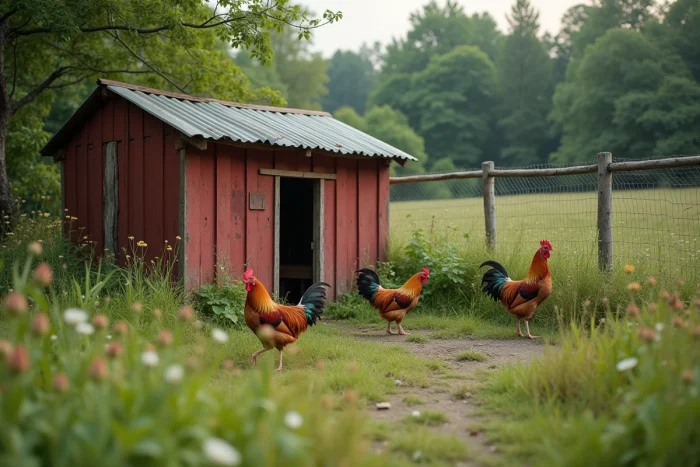
Magpies attack eggs, raid feeders, and stress hens. Protecting your chicken coop from these corvids requires combining several methods, as magpies quickly become accustomed to a single device. Which type of protection works over time, and which loses its effectiveness in just a few days?
1. Fine mesh bird netting over the enclosure
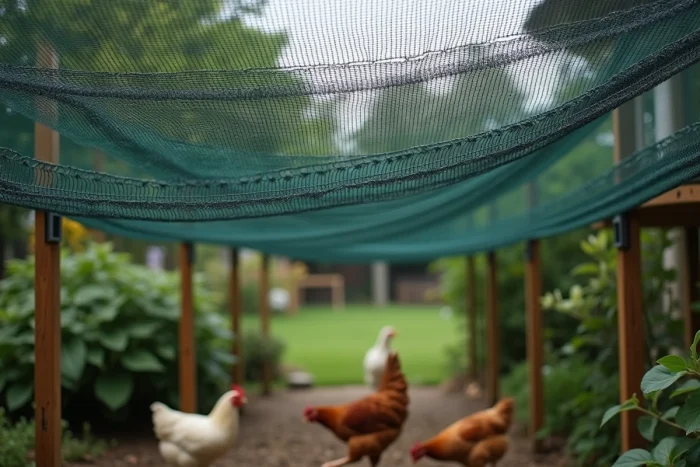
Covering the entire enclosure with tight mesh netting remains the most reliable physical barrier. So-called “light” nets protect against aerial attacks, but they are insufficient if ground access remains open. Opt for a net with a dense enough weight to withstand the pecking of corvids.
Secure the netting to stakes or a rigid frame, ensuring it is taut. A sagging net creates pockets where magpies can land and eventually find a weakness. Check the condition of the mesh every month, especially after windy episodes.
You can apply other tips to effectively scare away magpies in addition to this physical protection.
2. Airtight closure of feeders and grain storage
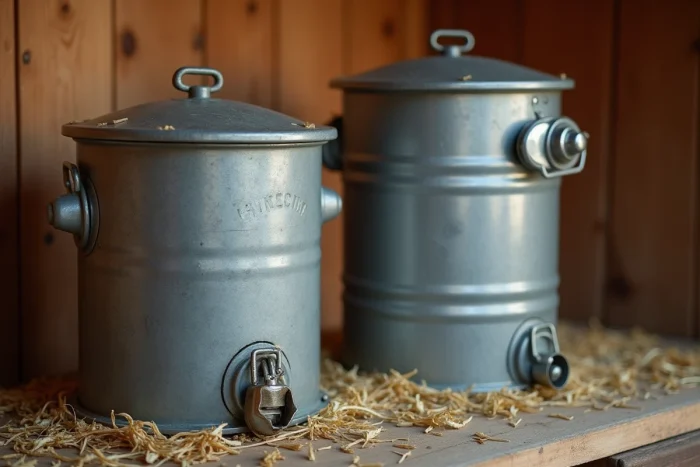
Magpies do not come only for the eggs. The hens’ food attracts them just as much, if not more. Storing grain in airtight containers and using limited-access hopper feeders significantly reduces the chicken coop’s appeal to these birds.
Removing accessible food sources is the most underestimated lever. A magpie that finds nothing to eat after several consecutive visits eventually looks elsewhere. Also, collect food scraps in the evening.
3. Rotation of visual scare devices every five days

CDs, holographic ribbons, and raptor silhouettes: these visual devices work, but only for a very short duration. Magpies have developed cognitive functions and quickly identify a static object as harmless.
The trick is to alternate the devices. Change the type of scare device and move it within the enclosure every four to five days at most. A simple rotation schedule maintains the element of surprise much longer than a scarecrow left in the same spot for weeks.
4. Automatic door to lock the chicken coop at night
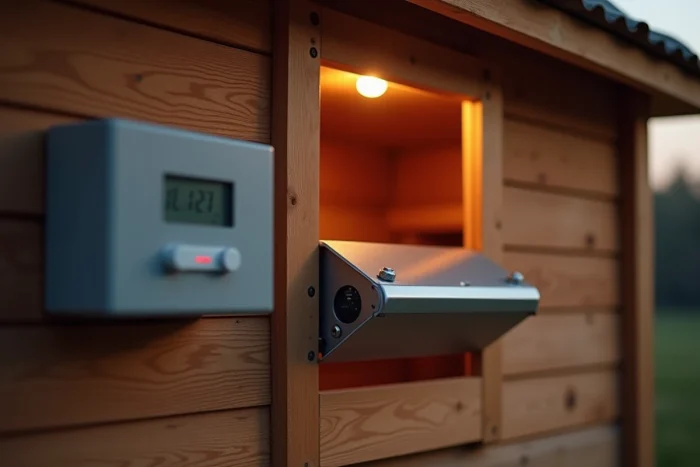
An automatic door closes and opens the chicken coop hatch according to a programmed schedule or a light sensor. This device protects the hens and eggs at night, when terrestrial predators are active, but it also secures the chicken coop early in the morning, before you wake up, when magpies begin their rounds.
Ensure that the mechanism leaves no lateral gaps. Magpies can squeeze through openings that are deemed too narrow for a bird of that size.
5. Buried fencing around the enclosure
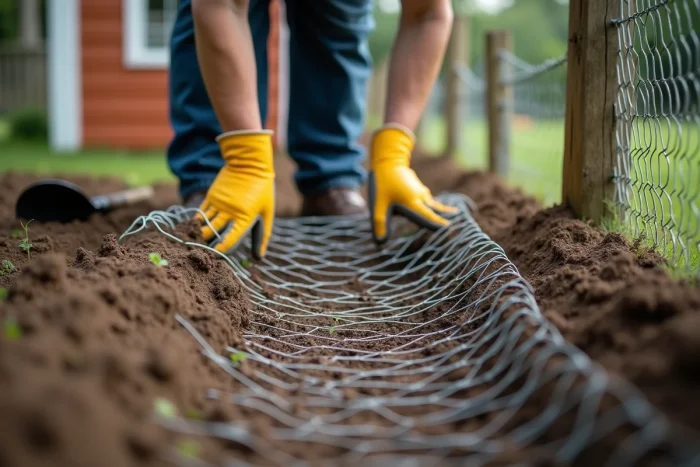
Burrowing the fencing to a sufficient depth around the enclosure prevents magpies from accessing food from below. This is not their primary mode of entry, but some magpies exploit poorly secured fencing to slip underneath.
A fence simply laid on the ground without anchoring is ineffective. Bury it at least twenty centimeters deep and fold the buried part outward in an L-shape to also block weasels and rats.
6. Collecting eggs twice a day
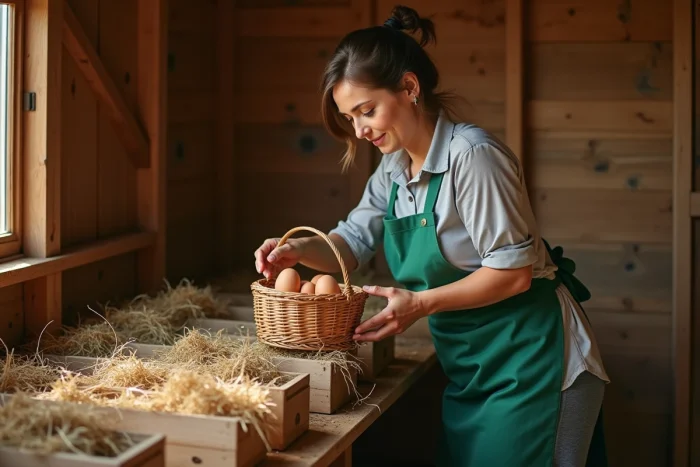
Leaving eggs in the nesting box serves as a permanent bait for magpies. Collecting eggs in the morning and early afternoon reduces the window of vulnerability. It’s a simple habit that costs nothing and complements all other measures.
If you cannot go twice a day, install a roll-away nesting box that rolls the egg into a closed compartment, out of reach of beaks.
7. Intermittent sound scare device
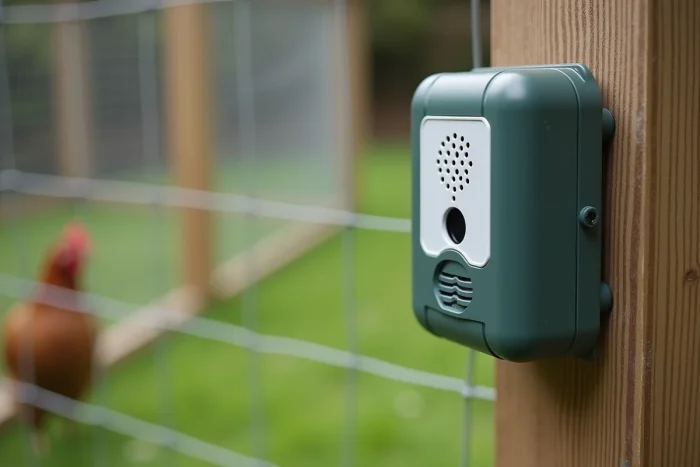
Sound devices (recorded raptor calls, ultrasound, random detonations) disturb magpies as long as the sounds and intervals are varied. A continuous or regular sound loses its effectiveness in a few days, just like a static visual object.
Combine sound with visual to multiply stimuli. The combination of two different types of stimuli delays habituation much more than a single device, even a highly effective one.
8. Planting dense hedges around the chicken coop
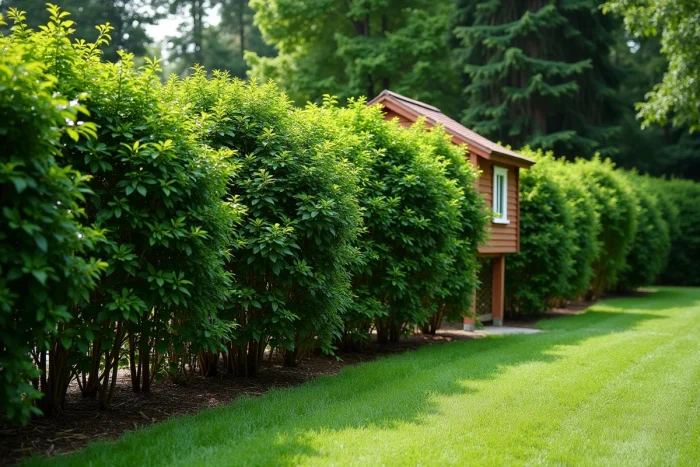
A thick hedge limits the visibility of the chicken coop from the usual observation posts of magpies. These birds spot their target from a high point (tree, roof, pole) before descending. Reducing their direct line of sight forces them to take more risks.
Evergreen species (privet, laurel, yew) provide cover year-round. However, expect several growing seasons before the hedge reaches a deterrent density.
9. Removal of nearby perching points
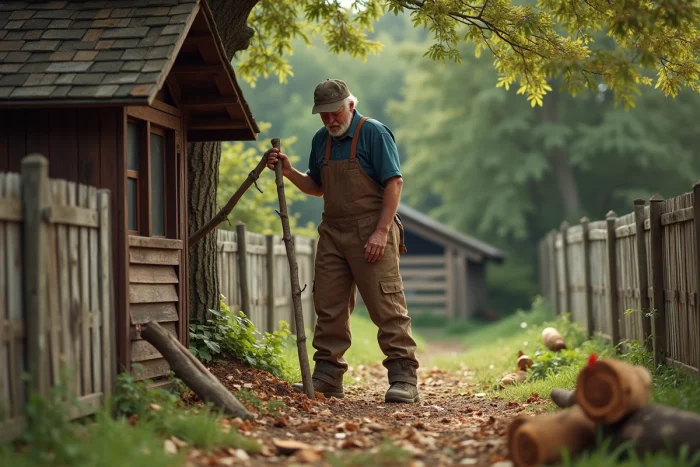
Magpies use low branches, fence posts, and roof edges as observation posts. Pruning branches located immediately near the chicken coop and installing bird spikes on horizontal ledges reduces parking areas.
Fewer available perches nearby increases the flight distance and decreases the number of daily attempts. This is a complementary measure that enhances the effectiveness of all others.
10. Presence of a rooster or guard dog
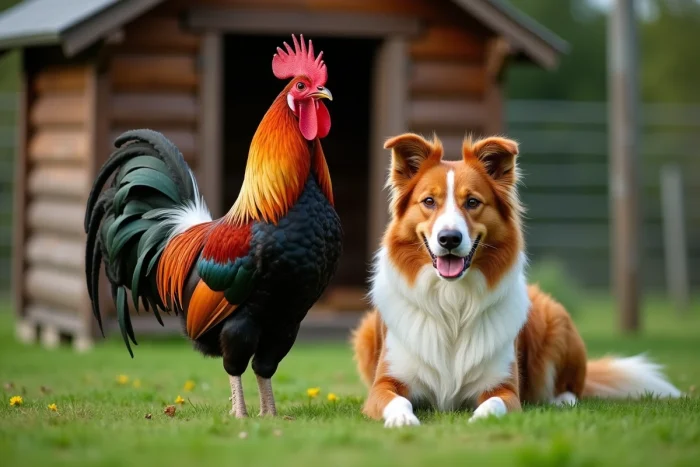
A rooster alerts the group as soon as an aerial intruder approaches. Its territorial behavior and alarm calls are often enough to scare away a lone magpie. A dog accustomed to the yard, roaming freely in the garden, serves as an even more effective natural deterrent.
The table below summarizes the relative effectiveness of each method based on whether it is used alone or in combination:
| Method | Effectiveness Alone | Combined Effectiveness | Duration Before Habituation |
|---|---|---|---|
| Bird netting | High | Very High | None (physical barrier) |
| Closure of feeders | Medium | High | None |
| Visual scare devices (with rotation) | Low to Medium | Medium | Few days without rotation |
| Automatic door | Medium | High | None |
| Buried fencing | Medium | High | None |
| Frequent egg collection | Medium | High | None |
| Sound scare device | Low to Medium | Medium | Few days without variation |
| Dense hedge | Low | Medium | None |
| Removal of perches | Low | Medium | None |
| Rooster or dog | Medium to High | Very High | None |
None of these measures solves the problem on its own. Physical barriers (netting, fencing, door) retain their effectiveness over time, while scare methods require regular rotation. Combining at least three devices of different natures remains the most reliable strategy for keeping magpies away from your chicken coop in the long term.