
Vascular leukoencephalopathy, visible on MRI as white matter hyperintensities, is more than a static radiological marker. Its progression affects subcortical circuits, and the resulting damage can impair walking, executive function and, ultimately, independence. Using physical activity in this context means going beyond the simple advice to “stay active” and targeting the mechanisms actually involved.
Vascular leukoencephalopathy and gait disorders: more than walking speed
General-interest articles often link white matter lesions with slower walking. The clinical picture is more nuanced. A review of research on white matter hyperintensities shows that gait disorders associated with leukoaraiosis involve more than a reduction in walking speed.
Dynamic balance, step length and gait-cycle regularity are affected in different ways depending on the location and volume of the lesions. Two patients classified as Fazekas 2 may have radically different gait profiles: one may have a predominant balance deficit, while the other has shorter steps without clear instability.
This variability has direct implications for exercise prescriptions. A program focused exclusively on walking at a moderate pace overlooks postural or coordination deficits that increase the risk of falls and hasten the loss of independence. An initial assessment of gait parameters—not just speed, but also step variability and single-leg balance—is essential to tailoring the program.
Recent data on physical activity and vascular leukoencephalopathy confirm that care cannot be standardized without taking each person’s gait profile into account.

Strength training and white matter lesions: findings from a recent randomized trial
Progressive strength training does not reduce white matter hyperintensities overall. In a 12-month randomized trial involving people with vascular subcortical cognitive impairment, a supervised program held twice a week and targeting the upper and lower limbs did not significantly reduce total lesion volume compared with a control program.
However, favorable differences were observed in certain brain regions, opening up a potential avenue for further research without establishing evidence of a general clinical benefit. These regional findings should be interpreted as exploratory, not as validation of a universal protocol.
Why distinguish MRI effects from effects on daily life
The absence of an overall reduction in lesions on imaging does not mean there is no functional benefit. Exercise helps maintain functional reserve, not just reduce lesion burden. Preserving muscle strength, coordination and cardiorespiratory endurance can partly compensate for deficits caused by white matter lesions, even if those lesions persist or progress.
Presenting physical activity as a way to “reverse leukoencephalopathy” would go beyond what current evidence supports. Its documented role is to maintain motor abilities and reduce the risk of falls—two direct ways to help preserve independence.
Adapted physical activity and leukoencephalopathy: program criteria for preserving independence
An appropriate program for a patient with cerebrovascular lesions is not a generic prescription to walk for 30 minutes every day. Several criteria determine its effectiveness:
- Supervision and gradual progression: the trial cited used supervised sessions twice a week, with loads adjusted progressively. Guidance from a physical therapist or an adapted physical activity instructor reduces the risk of falling during exercise itself—a greater concern for patients with balance disorders.
- Specific balance and coordination training, distinct from strength training alone. Single-leg stance exercises, courses involving changes of direction and dual-task training (walking while counting, for example) target the postural deficits characteristic of leukoaraiosis.
- Include strength training for both the upper and lower limbs. Overall loss of strength accelerates dependence in everyday activities (getting up from a chair, carrying groceries) well before cognitive problems become disabling.
- Take the individual’s profile into account: the trial’s exploratory analysis found an effect on total lesion volume in female participants, but not in male participants. This finding, which should be interpreted with caution, is a reminder that responses to exercise can vary from person to person and does not justify a one-size-fits-all protocol.
Vascular risk factors and exercise: a combined approach to slowing progression
Physical activity does not work in isolation. Its effect on quality of life for people with vascular leukoencephalopathy is part of the broader management of vascular risk factors: high blood pressure, diabetes, smoking and dyslipidemia.
High blood pressure remains the best-documented modifiable risk factor in the progression of white matter hyperintensities. Aerobic exercise helps regulate blood pressure, but it does not replace antihypertensive medication when indicated. Patients who combine strict blood pressure control with regular physical activity have a more favorable risk profile than those who rely on just one of these approaches.
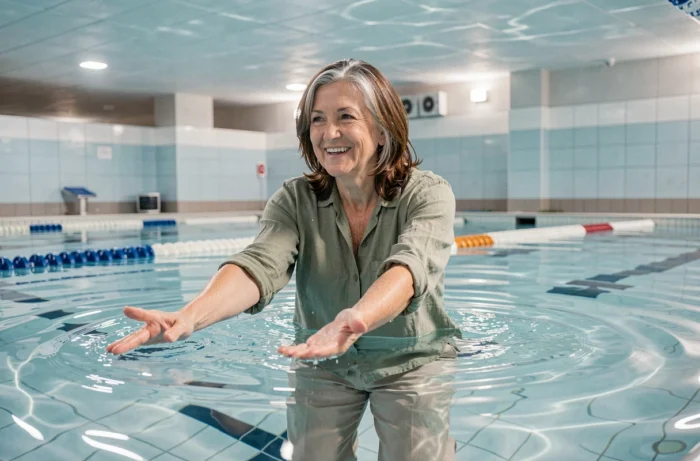
Cognitive stimulation and occupational therapy: complements to physical exercise
Executive difficulties associated with subcortical lesions (planning, mental flexibility and divided attention) may benefit from targeted cognitive stimulation. Occupational therapy can be provided alongside it to adapt the home environment and help maintain participation in everyday activities.
Combining physical exercise, cognitive stimulation and environmental adaptations is the most coherent three-part approach to slowing the loss of independence. None of these approaches alone is sufficient for a disease whose effects simultaneously affect movement, cognition and balance.
Regular MRI follow-up (Fazekas classification, lesion volume) remains the objective basis for adjusting care over time. If a patient’s lesions progress despite an active program, their overall treatment strategy—not just their exercise level—needs to be reassessed.