Taking an industrial tabbouleh out of the freezer and finding a pleasant dish to eat is not guaranteed. The semolina can become mushy, the vegetables can release water, and the taste can fade. Thawing an industrial tabbouleh requires some specific reflexes to avoid ending up with a bland mush on your plate.
Food safety of thawed tabbouleh: what ANSES and EFSA say
Before discussing texture or recipes, a health point is necessary. Tabbouleh is a grain-based salad made from semolina and raw or lightly cooked vegetables. This type of preparation provides a favorable environment for bacterial proliferation once it is out of the cold.
ANSES recommends thawing prepared dishes made from grains and vegetables below 4 °C, in the coldest part of the refrigerator. Consumption should occur within 24 hours after thawing, even in the absence of meat or fish in the recipe.
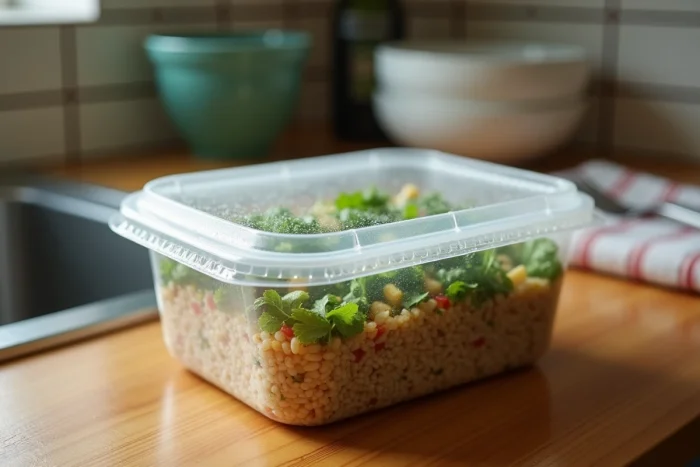
EFSA, in a scientific opinion from 2024 regarding ready-to-eat refrigerated foods, specifies that grain salads (tabbouleh, bulgur, couscous) promote the growth of Listeria monocytogenes in cases of repeated breaks in the cold chain. If you have already frozen and then thawed a tabbouleh, it should not be refrozen. To better understand how to freeze industrial tabbouleh according to Gourmet Galopin, start with a fresh product, portioned into airtight containers, and placed in the freezer without delay.
Thawing tabbouleh in the refrigerator: the only reliable method
You may have the reflex to leave a dish to thaw on the countertop at room temperature. For industrial tabbouleh, this gesture multiplies the risks. The moist semolina and finely chopped vegetables quickly enter the temperature zone where bacteria develop most rapidly.
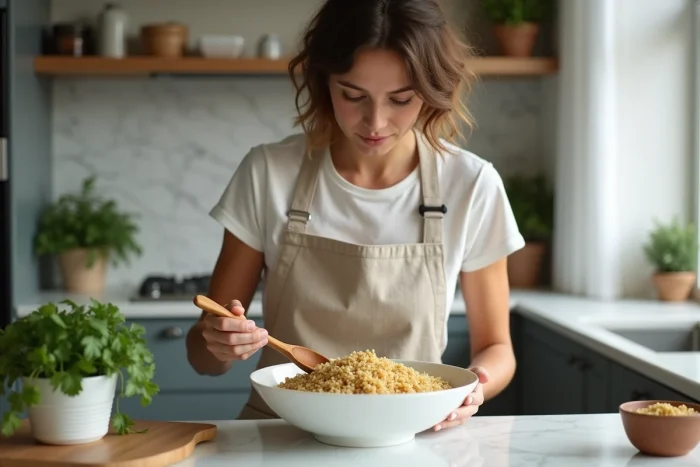
Place the container in the refrigerator the night before. Allow a full night for a standard-sized container. Slow thawing better preserves the texture of the semolina and limits the release of water from the vegetables.
Two common mistakes to avoid:
- The microwave, which heats unevenly and turns some areas into mush while others remain frozen.
- The hot water bath, which causes thermal shock and accelerates the degradation of herbs and dressing.
- Leaving the tabbouleh in its open packaging in the fridge without a lid, which dries out the surface and promotes cross-contamination.
Keep the packaging closed or transfer it to a container with a lid. The thawed tabbouleh will always have a slightly less firm texture than the fresh version, but the difference remains acceptable with this method.
Texture and taste of tabbouleh after freezing: salvaging what can be salvaged
Freezing alters the structure of the water contained in the vegetables. Ice crystals puncture the cell walls of tomatoes, cucumbers, and peppers. At the time of thawing, these vegetables release their juice. The result: the semolina absorbs excess liquid and becomes sticky.
An industrial tabbouleh often contains stabilizers that limit this phenomenon. The homemade version suffers more. In both cases, a few simple gestures can improve the final result.
Drain before seasoning
Take the tabbouleh out of the refrigerator and gently tilt the container. Let the excess liquid drain for a few minutes. Do not press the semolina, as you would crush the grains.
Re-season to compensate for the loss of flavor
The cold dulls flavors. A drizzle of olive oil, fresh lemon juice, and a few leaves of mint or flat-leaf parsley chopped at the last moment bring character back to the dish. The acidity of lemon revives the semolina better than any other addition.
Have you noticed that the thawed tabbouleh seems blander than you remember? That’s normal. The volatile aromas of the herbs dissipate during freezing. Adding fresh herbs at the time of serving directly compensates for this loss.
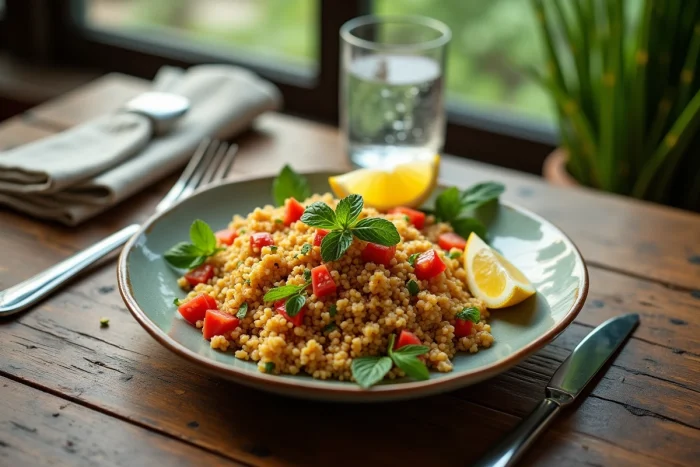
Add fresh vegetables for texture
Fresh diced cucumber, halved cherry tomatoes, or a bit of finely chopped red onion add the crunch that thawed vegetables have lost. This mix of thawed base and fresh garnish results in a dish much closer to a tabbouleh from the deli section.
Transforming thawed tabbouleh into a complete meal
If the texture of the thawed tabbouleh does not satisfy you as is, it can serve as a base for a different dish. Rather than throwing it away, repurpose it.
- Mixed with chickpeas and a drizzle of oil, it becomes a hearty lunch with a plant-based protein boost.
- Incorporated into an omelet or vegetable patties, the semolina binds the preparation, and cooking masks the mushy aspect.
- Served as a side dish with grilled fish, with a splash of warm vegetable broth poured over it to rehydrate the grains, it regains volume.
These transformations work particularly well because cooking or mixing with other ingredients smooths out the texture defects associated with thawing. A thawed tabbouleh served alone as a cold salad will always be less convincing than a fresh tabbouleh. When integrated into a recipe, the difference fades away.
The last reflex to keep in mind: do not prepare thawed tabbouleh for an outdoor meal in the heat of summer if you cannot keep it cool. The 24-hour limit after thawing is not just a comfort recommendation; it is a food safety issue validated by ANSES. A tabbouleh taken out of the refrigerator in the morning and left in the sun all afternoon does not forgive.