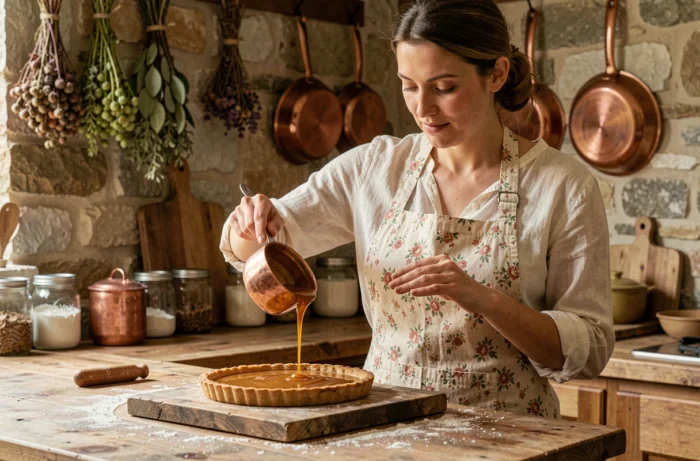
Caramel holds a special place in French pastry culture. Between traditional confectionery and a versatile ingredient, it comes in the form of spreads, sauces, fillings, and complete desserts. Mademoiselle Caramel fits into this gourmet vein by offering a universe centered around recipes and artisanal products based on caramel. Behind the apparent simplicity of cooked sugar, the production, labeling, and marketing of these products raise questions rarely addressed by culinary blogs.
Spreadable caramel: a product without a precise legal definition
Unlike honey or jam, spreadable caramel does not have a specific legal definition in France. It falls under the general rules of food labeling: ingredient list in descending order, highlighting allergens, nutritional declaration, minimum durability date, and storage conditions after opening.
This lack of a dedicated framework gives manufacturers some leeway. A spreadable caramel can contain butter, cream, condensed milk, or simply sugar and vegetable oil with flavoring. Consumers looking for a traditional dairy product must read the ingredient list carefully.
When you look about Mademoiselle Caramel, you discover an approach that highlights ingredients and homemade recipes, which contrasts with industrial products where the composition can sometimes be opaque.
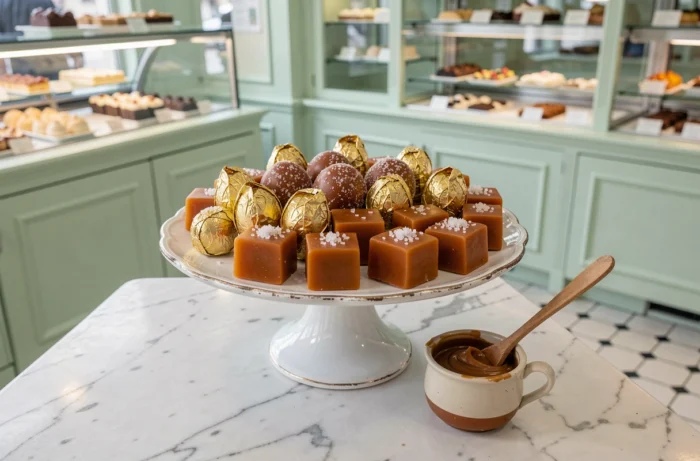
Caramel flavor and true caramel: what the regulations distinguish
The mention “caramel flavor” on a label does not guarantee the presence of milk or butter. European regulations distinguish several categories: “flavor,” “natural flavor,” and “natural caramel flavor” do not mean the same thing. A product simply labeled “caramel flavor” can replicate the taste without corresponding to a traditional salted butter caramel recipe.
For an artisan or small producer, this distinction has direct consequences on labeling. Using fresh butter and caramelized sugar allows for a transparent composition claim, while a synthetic flavor requires a different mention.
Labels to check on a jar of caramel
- The exact name of the product (salted butter caramel, caramel spread, caramel sauce) that reflects the actual composition
- The order of ingredients: the first listed is the one present in the largest quantity, revealing whether sugar or butter predominates
- The presence or absence of the mention “natural flavor,” indicating whether the taste comes from traditional cooking or an additive
- Allergens highlighted (milk, eggs, nuts depending on the recipes), mandatory even for small producers
Homemade caramel recipes: the cooking parameters that change everything
Successfully making homemade caramel relies on mastering temperature. Sugar goes through several cooking stages that determine the final texture: soft and coating for a sauce, firm and brittle for hard candy. The temperature window between the two is narrow.
Adding butter or cream to cooked sugar causes a thermal shock that stops caramelization. This seemingly simple action requires precise timing. Too early, the caramel remains pale and lacks aromatic depth. Too late, it crystallizes or burns.
Flavor pairings to explore
Caramel pairs well with ingredients that classic recipes often underutilize. Apple, vanilla, and chocolate remain safe bets. However, honey brings an interesting complexity when it replaces part of the sugar in cooking, provided the temperature is monitored closely since honey burns faster than sugar alone.
Caramel-enriched crepe batter represents another area for experimentation. Incorporating liquid caramel directly into the batter (with eggs and melted butter) alters the texture and color of the crepes without needing additional filling.

Online sale of caramel products: often unknown obligations
Selling spreadable caramel or candies online imposes the same labeling constraints as selling in stores. Mandatory information must be included on the product sheet before purchase: name, ingredient list, allergens, net quantity, durability date, and storage conditions.
For artisans who produce in small quantities and sell directly to consumers, some exemptions exist regarding the complete nutritional table. Field reports vary on this point: some inspectors require the complete table from the start of online sales, while others accept a simplified declaration for very small productions.
Information on allergens remains mandatory in all cases, including for products sold in bulk or by weight at markets. A salted butter caramel contains at least milk, and often traces of nuts depending on the production workshop.
Choosing artisanal caramel: concrete criteria
In the face of diverse offerings, a few guidelines help distinguish an artisanal product from a repositioned industrial product. A quality artisanal caramel features a short ingredient list, typically five to seven components: sugar, cream, butter, salt, possibly vanilla or fleur de sel.
The texture also provides clues. A spreadable caramel made with fresh butter often has a less homogeneous consistency than an industrial product stabilized by emulsifiers. This slight irregularity is a sign of traditional production, not a flaw.
The minimum durability date serves as another indicator. A product without preservatives generally lasts less long than an industrial equivalent, which means checking storage conditions after opening, particularly refrigeration.
French artisanal caramel sits at the crossroads of confectionery tradition and contemporary regulatory requirements. For both consumers and small producers, transparency about ingredients and manufacturing methods remains the most reliable criterion for navigating an offering where the term “caramel” encompasses very different realities.