Mergers between companies, dual-use drone programs, record order books for aircraft manufacturers: the first half of 2026 is concentrated with structural movements that are reshaping the map of global aeronautics. What gaps are widening between the major manufacturers, and which emerging programs deserve special attention in the aeronautical news?
Dual-use drone programs in Europe: a sector taking shape
Competitors largely cover the Airbus-Boeing duel and company mergers. However, the coordinated rise of civil and military drones on the European continent is changing industrial balances.
The Civil Drones Innovative Programme, led by the ECDI cluster, concluded its first “cut-off” in early 2026 with a first wave of selected SMEs. The stated goal is to support dual civil and defense technologies for drones, following the European Defence Fund program of the European Commission.
This convergence between civil aviation, internal security, and defense marks a turning point for SMEs in the sector. Competitiveness clusters like Aerospace Valley are actively promoting these calls for projects, and Airnews regularly covers the advancements of this emerging sector.
The signal is clear: Europe is no longer content with regulating drone airspace. It is now financing their industrial development with a logic of technological sovereignty.

Airbus vs. Boeing: overview of industrial dynamics in 2026
The balance of power between the two dominant aircraft manufacturers is reflected in their recent trajectories. Airbus shows solid financial health, while Boeing remains mired in operational difficulties related to its future 777X wide-body aircraft and the replacement of the 737 MAX.
| Criterion | Airbus | Boeing |
|---|---|---|
| Recent financial situation | Positive results, increasing production | Recurring losses for several quarters |
| Key wide-body program | A350 (increased production rate) | 777X (repeated delays, source of losses) |
| New generation single-aisle | A220/A320neo in service | Launch of the successor to the 737 MAX |
| Notable recent orders | Record order books | 200 aircraft announced after the Trump-Xi Jinping meeting |
| Assembly outside historical bases | First C295 assembled in India rolled out | No recent comparable announcement |
The announcement of 200 commercial aircraft for Boeing after the meeting between Donald Trump and Xi Jinping serves as both a diplomatic and industrial signal. China represents a major negotiation lever for Boeing, whose commercial relationship with Beijing remains volatile.
Assembly of the C295 in India: a precedent for Airbus
The rollout of the first Airbus C295 assembled in India marks a milestone in the European manufacturer’s industrial localization strategy. This transfer of skills to sites outside Europe responds to a dual logic: access to local defense markets and reduction of production costs.
Boeing, for its part, has launched the project for the replacement of the 737 MAX, a program that will mobilize considerable resources over the next decade. The timeline remains unclear, contrasting with the visibility that Airbus offers on its assembly lines.
Korean Air-Asiana merger: reshaping the Asian skies
Approved by the boards of directors of both companies on May 13, 2026, the Korean Air-Asiana merger creates a mega-company that disrupts the balance of air transport in the Asia-Pacific region.
The MOLIT (South Korean Ministry of Transport) is reexamining traffic rights and code-sharing agreements with Chinese and Japanese carriers to integrate this new reality. This aspect of reallocating air slots will determine the merged company’s ability to make its long-haul routes profitable.
The consequences extend beyond South Korea. Member airlines of SkyTeam (of which Korean Air is a part) and those of Star Alliance (of which Asiana was a member) will need to reconfigure their sharing agreements. The question of the new entity’s affiliation alliance remains open.
Aeronautical events in France: the 2026 appointments
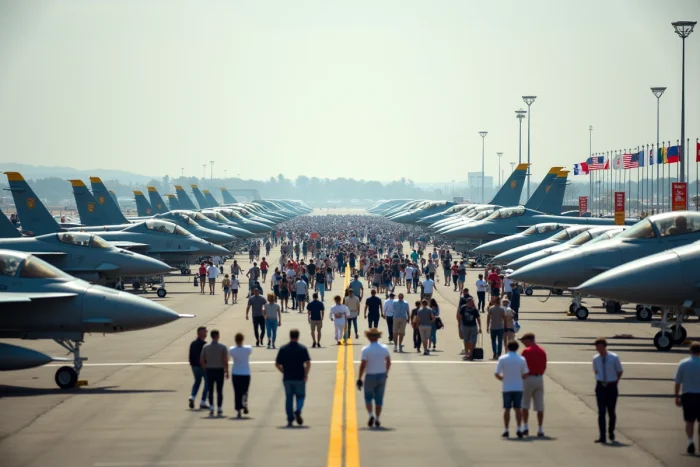
The French calendar remains busy for professionals and aviation enthusiasts. Several events structure the first half:
- France Air Expo 2026, held in Lyon-Bron, brings together stakeholders in general aviation around the latest innovations in light aircraft, maintenance, and pilot training.
- The missions organized by French aeronautics clusters, such as the one led by Aerospace Cluster in Friedrichshafen in April 2026, allow SMEs in the sector to explore European markets.
- The GIFAS (Group of French Aeronautics and Space Industries) maintains a steady pace of press releases and events, with a notable conference on May 13, 2026, regarding the state of the sector.
These appointments confirm that the French aeronautics sector remains a leading industrial engine, despite geopolitical tensions and recruitment difficulties affecting the entire sector.
European air transport: traffic increasing despite tensions
Passenger air traffic in Europe grew by 3.8% in March 2026 compared to the same period the previous year, despite the conflict in the Middle East. This resilience in air transport contrasts with warning signals issued by some airlines, such as airBaltic, which deepened its losses in the first quarter while making its A220 fleet fully operational.
In contrast, Gulf carriers like Emirates continue to show high performance and are investing heavily in their brand image and long-haul capabilities. The gap between traditional European airlines and Gulf carriers is not narrowing.
The aeronautical news of the first half of 2026 is characterized by underlying movements rather than spectacular breaks. The structuring of the drone sector in Europe, the reshaping of alliances in Asia, and the persistent imbalance between Airbus and Boeing create a landscape where established positions no longer guarantee anything. European passenger traffic, up 3.8% in March, shows that demand is currently absorbing geopolitical turbulence without faltering.